The development of electronic technology, computer microelectronics, and automation technology in China has propelled the advancement of welding automation technology. In particular, the introduction of technologies such as numerical control (NC) technology, flexible manufacturing technology, and information processing technology has facilitated a revolutionary development in welding automation.
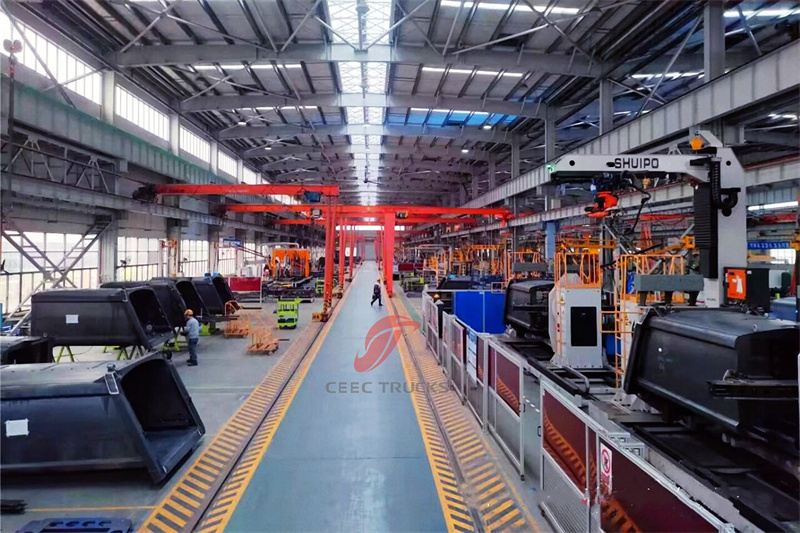
Welding, as an important metal joining technology, is widely used in the manufacturing industry. With the development of modern welding technology, automated welding equipment is constantly being updated and iterated, gradually replacing manual welding in many fields. Compared to traditional manual welding methods, automated welding technology is more efficient, produces more stable weld quality, and results in more aesthetically pleasing welds.
※ The impact of automated welding on the manufacturing of compator garbage trucks:
In recent years, with increasing environmental awareness and growing demand for waste disposal, garbage rear loaders have attracted attention for their high efficiency, energy saving, and environmental friendliness.
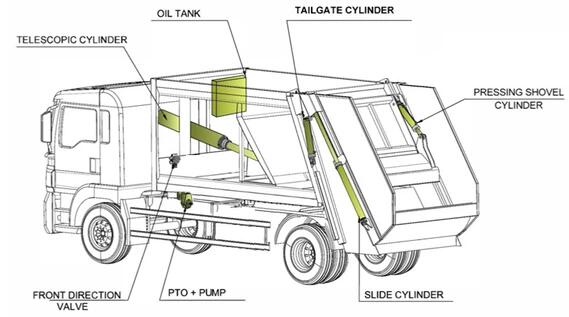
Each high-quality garbage compactor truck relies on a well-established production line to ensure quality and efficiency. The manufacturing process involves multiple steps, including chassis assembly, body fabrication, and hydraulic system installation. The introduction of intelligent robotic control systems has significantly improved production efficiency and product quality. Precise welding techniques and painting processes enhance the stability and aesthetic appeal of the garbage rear loader. Through these advanced processes and material applications, garbage compactor trucks are safer and more reliable in use.
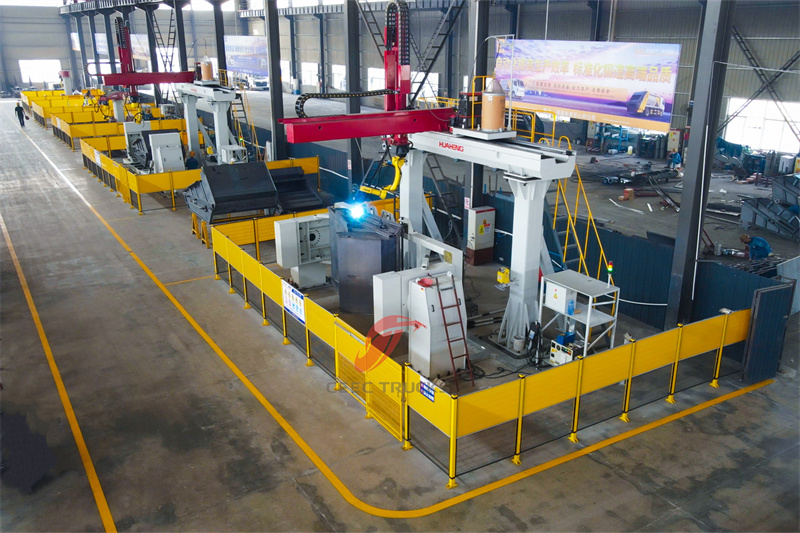
※ Why did CEEC factory take the lead in adopting automated welding manufacturing to produce compactor garbage trucks?
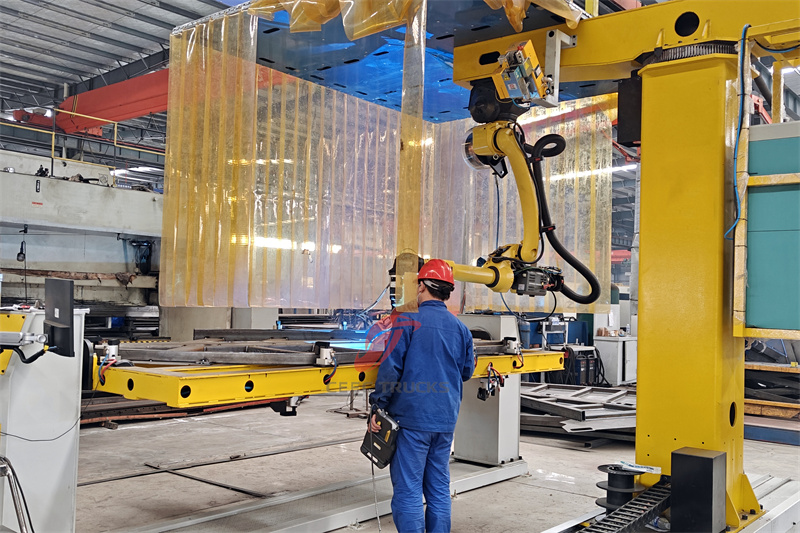
(1) Precision and Efficiency: Automated welding can achieve high precision, high quality, high efficiency, and high reliability through calculation.
(2) Modularization: Modularization and integration make it extremely convenient to expand the system's functions, enabling large-scale mass production of personalized compactor garbage trucks, reducing costs and shortening delivery time.
(3) Intelligence: Intelligent automated welding equipment can not only complete the automated welding process according to instructions, but also automatically optimize the welding process and welding parameters according to the actual welding situation.
(4) Networking: Due to the development of modern network technologies such as intelligent interfaces and remote communication, the automatic control of welding technology is integrated.
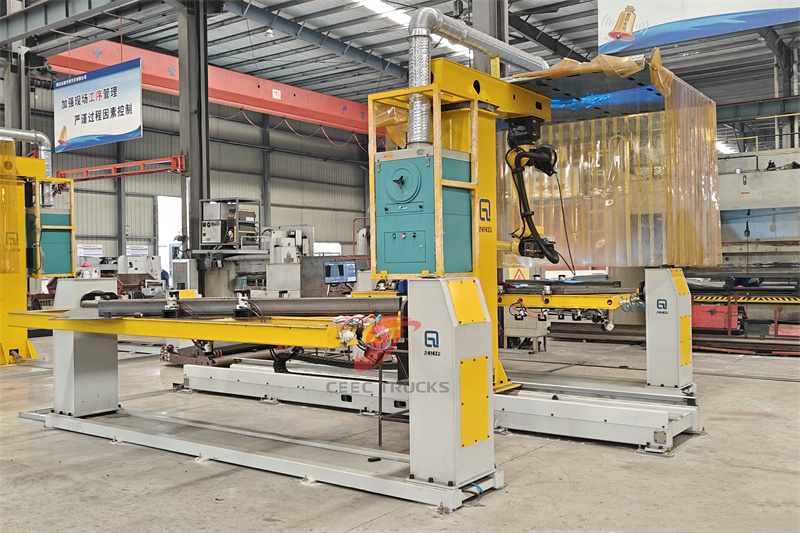
※Practice of Automated Welding in the Manufacturing of Compactor Garbage Trucks:
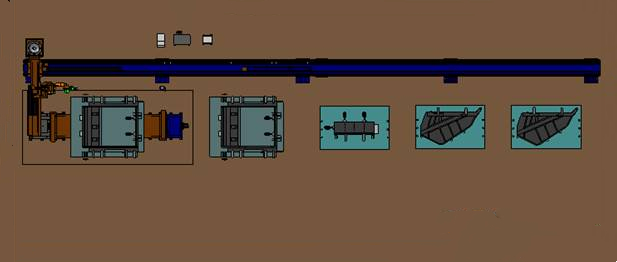
① Workstation Layout: Multi-station linear layout.
② Manual follow-up tooling is used for assembly welding,dedicated pneumatic or manual tooling is used for welding side plates and other components.
③ Welding Process: MAG welding is used, with welding wire of Φ1.0~1.2mm diameter, argon-rich gas (80%Ar+20%CO2) shielded welding, for fillet joints, T-joints, and butt joints.
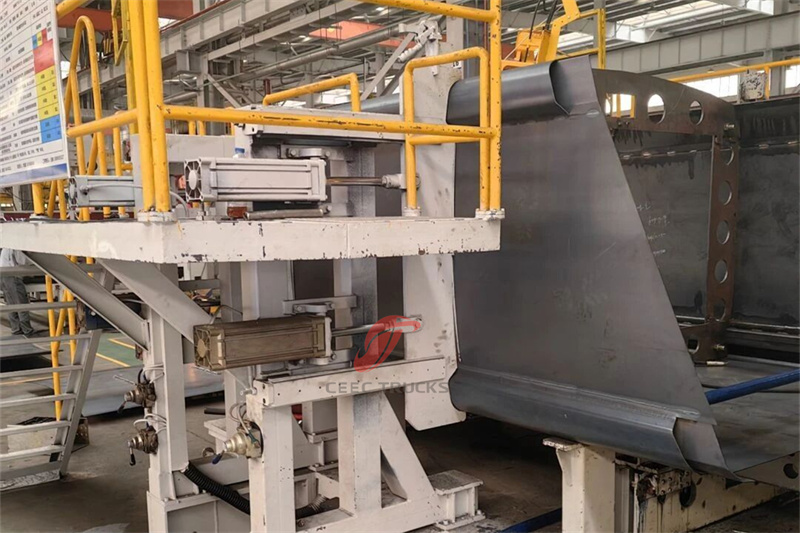
④ Product Process Flow:
Hopper Welding Process Flow: Assembly of external tooling at the workstation → Lifting the assembled tooling and workpiece together onto the workstation positioner → Robot welding → Lifting the entire tooling and workpiece down from the workstation → Manual welding of the lowered workpiece and assembly of other components.
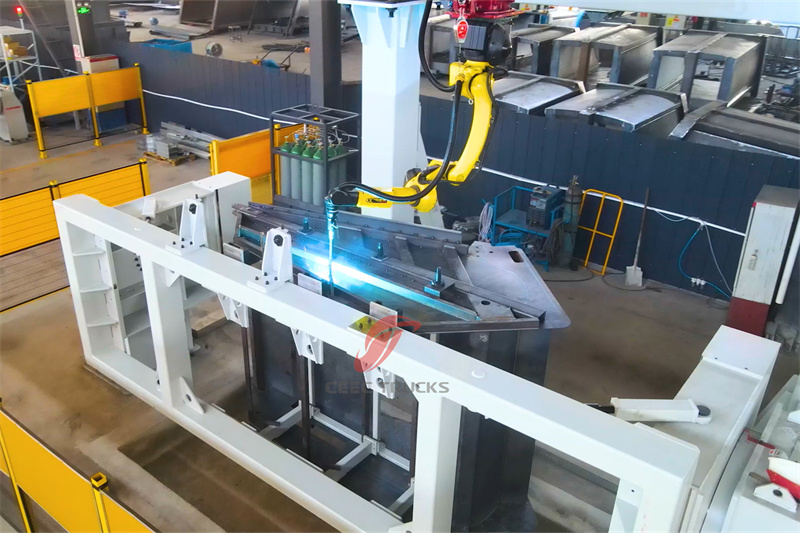
The garbage container welding process is as follows: First assembly of tooling → First welding (internal welding) → Second assembly (positioning of external components) → Hoisting the assembled workpiece and tooling together onto the workstation positioner and clamping them in position → Second welding (robot welding of external welds) → Removing the workpiece → Manual welding for further repairs.
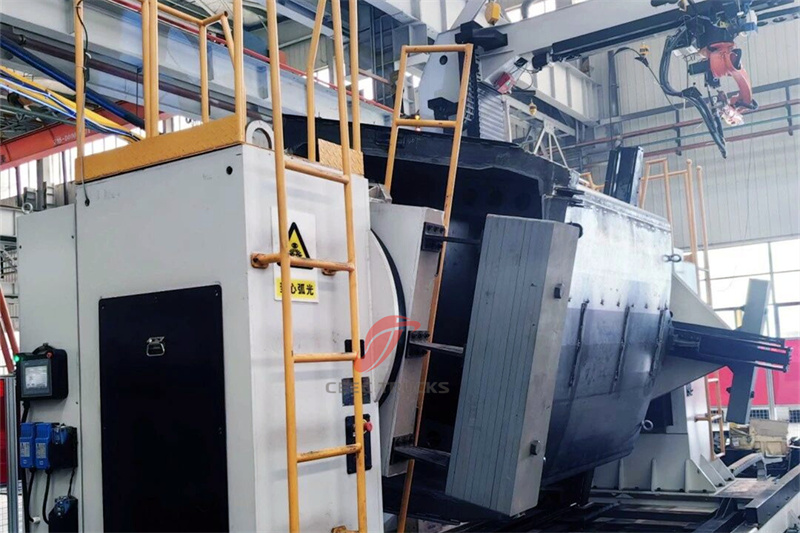
⑤ The vehicle frame, constructed from Q345 high-strength steel plates, utilizes automated welding technology to ensure stable weld quality and consistent material density, enhancing the overall load-bearing capacity and density of the garbage truck structure, making it more capable of withstanding complex operating conditions.
You may be interested in the following information


Whatsapp : +86 13647297999
Email : tom@ceectrucks.com
Tel : +86 13647297999